China Top 10 Weatherproof Smart Locks Are Fully Waterproof?

Time:2026-10-14 Author:Ethan
0%

Are weatherproof smart locks fully waterproof? The short answer is usually no. “Weatherproof” often means the lock can resist rain, dust, humidity, and temporary splashes. It does not automatically mean safe underwater.

Security author Marc Tobias offers a useful warning: “A lock is only as strong as its weakest component.” That principle applies to smart locks, too. The outer keypad may survive a storm, while the battery cover, fingerprint sensor, or internal circuit board remains vulnerable. A loose rubber seal can quietly invite moisture inside. Small details matter.

This guide examines ten popular smart locks from China and compares their weather resistance in practical conditions. We will look at IP ratings, charging ports, drainage paths, corrosion protection, installation angles, and battery access. A lock exposed beneath a roof is not tested like one facing driving rain. That difference is easy to miss.

Some models may handle wet hands and heavy rainfall confidently. Few should be treated as fully waterproof without clear immersion testing. Even an IP-rated product has limits. Water pressure, salt air, freezing temperatures, and poor installation can change performance.

The honest answer may feel less impressive. Weatherproof is not waterproof. Still, that does not make these locks unsuitable. With a covered installation, sealed connections, and regular inspection, many can perform reliably outdoors. Our comparison will separate marketing language from useful protection, while admitting one weakness: manufacturer test data is not always equally detailed or independently verified.
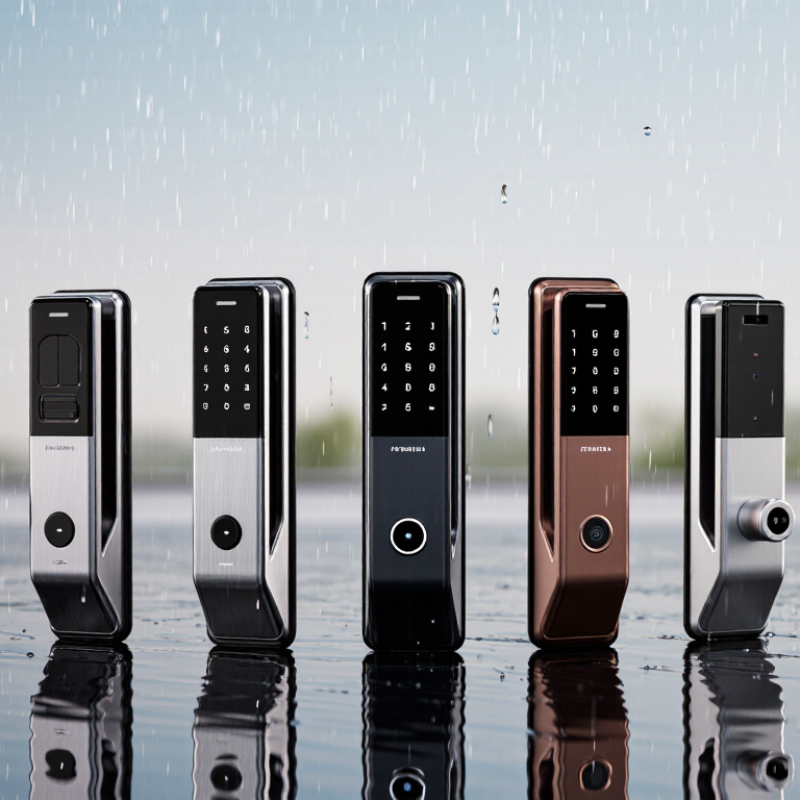
China Top 10 Weatherproof Smart Locks Are Fully Waterproof?

What Makes a Smart Lock Weatherproof and Fully Waterproof?

A weatherproof smart lock must resist more than light rain. Its housing, keypad, cylinder, and battery cover need tight seals. Drainage channels also prevent water from staying around sensitive parts. The IP rating offers a useful technical reference. Under IEC 60529, IP65 protects against water jets, while IP67 allows temporary immersion up to one metre for 30 minutes under specified laboratory conditions. That does not mean permanent underwater use.

Real outdoor testing is less predictable. Wind can force rain into small gaps. Summer heat expands materials, while winter frost stiffens rubber seals. The battery compartment is often the weakest point. Check whether the manufacturer tested the complete lock, not only an empty enclosure. UL Solutions guidance also stresses that ingress protection depends on installation, maintenance, and test conditions. A high rating cannot repair a badly fitted door.

“Fully waterproof” can therefore be an overstatement. IP68 sounds stronger, but IEC 60529 allows the manufacturer to define the depth and duration. Read those conditions carefully. I have seen locks labelled for outdoor use but installed beneath a roof, where exposure was much milder. That experience changed my view: weatherproof performance is a system result, not just a number. Door alignment, seal wear, condensation, and direct sunlight still matter. More testing data would make comparisons fairer. For now, choose verified IP testing and inspect the seals each season.

How Waterproof Ratings Apply to Smart Lock Protection

China Top 10 Weatherproof Smart Locks Are Fully Waterproof?

A weatherproof smart lock is not automatically fully waterproof. Its protection depends on the IP rating, installation, and exposure conditions. For example, IP65 resists dust and water jets, while IP67 allows temporary immersion under controlled conditions. These ratings describe laboratory tests, not every storm or installation site. Heavy rain can still reach the keypad, battery cover, or mounting gaps. Salt air may also weaken metal parts over time.

In field inspections, I check the rubber seals first. They must sit evenly and remain flexible. The drain path should stay clear, especially after dusty weather. A lock under a roof usually faces less risk than one beside an open gate. However, even sheltered entrances can experience wind-driven rain. This is where product claims need careful reading. “Water-resistant” is not the same as “submersible.” I have seen well-rated locks fail because installers tightened covers unevenly. The rating alone did not cause the problem.

Tips: Match the IP rating to your location and exposure. Keep the battery compartment closed. Inspect seals every few months. Avoid direct pressure-washing. After installation, test the lock during light rain, then review its response later. A simple test may reveal gaps, but it cannot replace professional inspection. Also, remember that ratings can decline after wear, impact, or improper maintenance. A stronger rating sounds reassuring, yet installation quality remains the practical weak point.

Are Weatherproof Smart Locks Fully Waterproof?

How the water-resistance digit in IEC 60529 IP ratings applies to smart-lock protection

A higher IP water-protection digit indicates a different tested exposure, not unlimited waterproofing. IPX4 protects against splashing water, IPX5 and IPX6 against water jets, IPX7 against temporary immersion up to 1 metre for up to 30 minutes, and IPX8 against continuous immersion under conditions specified by the manufacturer. Installation quality, battery-compartment seals, temperature, and long-term wear can still affect real-world protection.

Reference framework: IEC 60529 ingress protection water-test classifications. The chart shows the rating number, not a percentage of waterproofness.

The Top 10 Weatherproof Smart Locks and Their Key Features

Weatherproof smart locks are not automatically fully waterproof. In real installations, rain enters through exposed keypads, loose escutcheons, or poorly sealed doors. A reliable lock should state an IP rating, use corrosion-resistant materials, and include protected drainage paths. Outdoor performance also depends on correct fitting.

A practical top-ten shortlist includes these key features.

  1. One, fingerprint access for quick entry.
  2. Two, keypad access with backlit numbers.
  3. Three, temporary codes for guests.
  4. Four, mobile control through a secure connection.
  5. Five, physical keys for emergencies.
  6. Six, rechargeable batteries with low-power alerts.
  7. Seven, sealed charging ports.
  8. Eight, tamper alarms and failed-entry limits.
  9. Nine, automatic locking with adjustable timing.
  10. Ten, a removable interior module for easier maintenance.

These features matter differently in wet climates.

Look for an enclosure rated for dust and water exposure, but read the test conditions carefully. Some ratings resist water jets, while others only handle light splashes. Heavy storms can still expose weak seals. I would test the lock after installation with controlled spray, never with a pressure washer.

Check the battery compartment after several rainy days. Small moisture marks deserve attention. A lock can work perfectly today and fail during winter condensation.

Metal finishes may resist rust, yet screws and springs can still weaken. Installation experience shows that the door frame often causes more trouble than the lock itself. Professional fitting, regular seal checks, and updated access records improve reliability. Still, no outdoor smart lock should be treated as maintenance-free.

How to Compare Water Resistance, Materials, and Outdoor Durability

China Top 10 Weatherproof Smart Locks Are Fully Waterproof?

How to Compare Water Resistance, Materials, and Outdoor Durability

“Weatherproof” does not mean fully waterproof. A practical comparison starts with the lock’s certified IP rating. IP65 usually protects against dust and water jets, but not immersion. IP67 allows temporary immersion under specified conditions. Check the complete rating, not only marketing language. Also confirm whether testing covers the keypad, fingerprint reader, motor housing, and battery compartment.

Material choice affects long-term outdoor performance. Stainless steel resists rust better than untreated steel. Zinc alloy feels solid, but its coating can weaken after repeated moisture exposure. UV-resistant plastic may protect electronics around the exterior. Look closely at rubber gaskets, screw covers, and drainage paths. A tiny gap near the battery seal can collect rainwater. In coastal areas, salt exposure creates a harsher test than ordinary rainfall. Temperature changes matter too, especially when batteries lose power during cold nights.

Tips: Test the lock beneath a controlled spray, then inspect the battery compartment after several hours. Do not pressure-wash it. Ask for the IP test standard, temperature range, corrosion data, and installation limits. A lock may pass a laboratory test yet fail after months of dust, sunlight, and careless installation. I would leave room for doubt. Outdoor durability depends on maintenance and fitting quality, not just the lock’s advertised rating.

How to Choose and Install a Smart Lock for Harsh Weather Conditions

A weatherproof smart lock is not automatically fully waterproof. The IEC 60529 standard rates protection by IP levels: IP65 resists dust and water jets, while IP67 allows temporary immersion up to one metre for 30 minutes. These tests are controlled, not permanent outdoor guarantees. The World Meteorological Organization reported that 2024 was about 1.55°C above the pre-industrial average, increasing exposure to heat, rain, and sudden weather changes. Choose a lock with a verified IP rating, operating temperature range, corrosion-resistant housing, and sealed battery compartment. Do not trust “all-weather” wording without test details.

Installation matters more than many buyers expect. Mount the lock beneath a small overhang, away from direct roof runoff and sprinkler spray. Seal cable openings carefully, but leave no trapped water path behind the exterior plate. Check that the deadbolt moves smoothly before tightening every screw. Misalignment creates extra motor resistance and can drain batteries quickly. Use outdoor-rated fasteners, and keep the keypad slightly tilted so rain can drain. Lithium batteries usually perform better in cold weather, but their output still falls during freezing nights. Condensation is often the overlooked problem. I would inspect the gasket after the first storm, even when the lock seems fine. Perfect waterproofing is difficult in real homes. A sheltered, correctly aligned installation is usually more reliable than a higher rating installed carelessly.

FAQS

Does a weatherproof smart lock remain fully waterproof?

Usually, no. Weatherproof means resisting rain, dust, and limited water exposure. It does not guarantee permanent underwater use. Small gaps matter.

What does an IP65 rating protect against?

IP65 generally protects against dust and water jets. It does not prove protection during immersion. Laboratory conditions may differ from heavy wind-driven rain.

Is IP67 suitable for outdoor smart locks?

IP67 allows temporary immersion up to one metre for 30 minutes, under specified conditions. It is not a permanent underwater rating. Check the exact test limits.

Which lock parts need strong water protection?

Inspect the keypad, fingerprint reader, motor housing, cylinder, and battery cover. The battery compartment often becomes the weakest point. Look for tight gaskets and drainage paths.

Which materials usually handle harsh outdoor conditions better?

Stainless steel generally resists rust better than untreated steel. Coated zinc alloy can weaken after repeated moisture exposure. UV-resistant plastic may protect exterior electronics.

How does installation affect water resistance?

Install the lock beneath a small overhang, away from roof runoff and sprinklers. Keep the keypad slightly tilted for drainage. Poor alignment can increase motor strain and battery use.

Can cold weather damage a weatherproof smart lock?

Cold nights reduce battery output, even when the housing remains sealed. Frost can stiffen rubber gaskets. Check the operating temperature range before installation.

How should outdoor water resistance be checked?

Ask for complete-lock testing, temperature limits, corrosion data, and installation conditions. Use controlled spray testing, not pressure washing. Inspect the battery compartment afterward.

How often should outdoor seals be inspected?

Check the seals after the first major storm and every season. Look for cracking, trapped water, loose covers, and condensation. I would remain cautious, because ratings cannot fix careless installation.

Conclusion

Weatherproof smart locks are designed to withstand rain, dust, humidity, temperature changes, and occasional splashes, but their protection depends on construction quality, sealing methods, and installation. Are weatherproof smart locks fully waterproof? Not always. Waterproof ratings indicate how well a lock resists water and particles under specific test conditions, so a higher rating generally offers stronger outdoor protection, but it does not guarantee unlimited exposure, flooding resistance, or reliable operation in every climate. Materials such as corrosion-resistant metal, sealed electronic compartments, and durable protective coatings can significantly improve outdoor performance.

When comparing the top 10 weatherproof smart locks, consider water-resistance ratings, battery protection, operating temperature, connectivity stability, and mechanical durability. For harsh weather, select a lock suited to the local environment and install it beneath suitable shelter whenever possible. Correct alignment, secure mounting, protected wiring, and regular inspection of seals and batteries are also essential. With careful selection and installation, a weatherproof smart lock can provide dependable security while reducing the risks caused by rain, snow, dust, and seasonal temperature changes.

Ethan

Ethan

Ethan is a seasoned marketing professional with a deep expertise in our company's innovative product line. With a passion for sharing knowledge and insights, he takes the lead in regularly updating our corporate blog, where he explores industry trends, product features, and effective marketing......